2026 Top Mens Lunch Box Trends for Global Buyers

Time:2026-10-16 Author:Mason
0%

The 2026 Mens Lunch Box market is moving beyond simple food storage. Global buyers now expect durability, clean design, and practical performance in one compact product.

Thomas Bertrand, founder of Bento&Co and a specialist in Japanese lunchware, once described the bento as “not just a lunch box, but a way of life.” That idea still matters. A lunch box now reflects work routines, health priorities, travel habits, and personal style. Buyers are watching modular compartments, leak-resistant seals, insulated walls, stainless steel interiors, and lightweight recycled materials. Some markets prefer warm meals. Others favor cold salads, snacks, or office meal preparation.

Small details create visible value. A secure latch should close without force. A divider should stay firm beside rice and vegetables. The silicone seal must remain flexible after repeated washing. These features sound basic. They often decide repeat orders.

Sustainability will shape many purchasing decisions in 2026, but claims require evidence. Recycled content, food-contact safety, packaging reduction, and product lifespan need clear documentation. Vague green language may damage buyer confidence.

Color trends are also changing. Earth tones, matte black, muted blue, and soft green are gaining attention. Yet no trend is universal. That assumption can fail across regions.

This guide examines the leading Mens Lunch Box trends for global buyers. It connects consumer behavior with sourcing realities, product quality, and responsible design. Some predictions may prove imperfect. Markets change quickly, and practical testing remains more valuable than attractive forecasts.
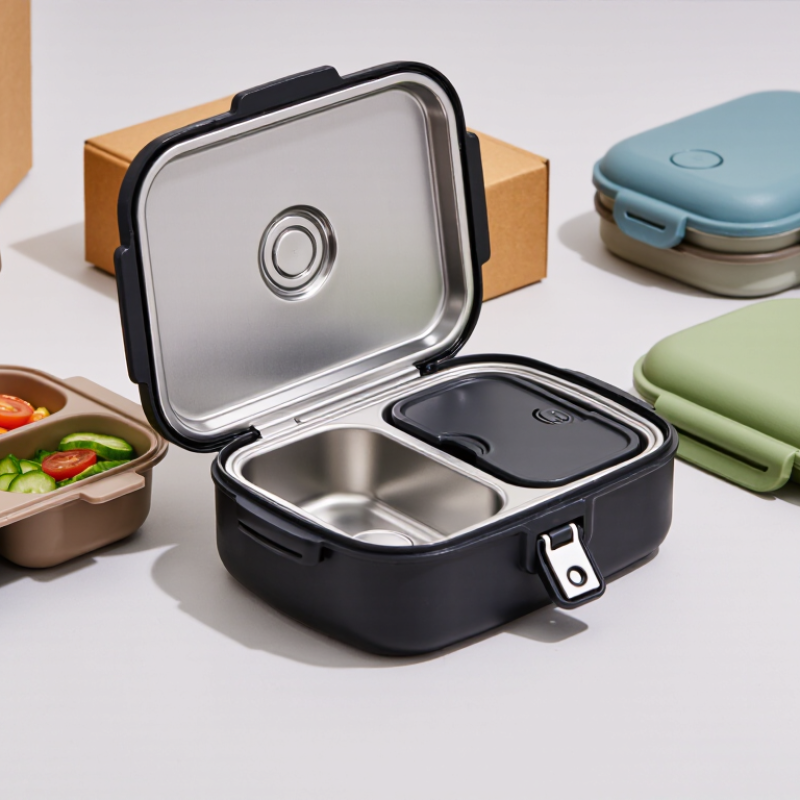
2026 Top Mens Lunch Box Trends for Global Buyers

What Defines Men’s Lunch Boxes in 2026

2026 Top Men’s Lunch Box Trends for Global Buyers

What Defines Men’s Lunch Boxes in 2026

Men’s lunch boxes in 2026 focus on practical performance, not oversized decoration. Buyers increasingly expect compact shapes, strong insulation, and easy cleaning. A box should fit inside a work bag without crushing fruit or leaking soup. Interior dividers help separate rice, vegetables, snacks, and sauces. Removable inserts also support different meal habits.

Materials now matter more. Food-safe stainless steel, durable recycled fabrics, and BPA-free containers can improve daily reliability. Buyers should check insulation tests, zipper quality, seam strength, and cleaning instructions. A stylish surface means little if condensation reaches a laptop. That still happens with some products.

Tips: Test the box with hot soup for four hours. Check whether the lid stays secure after repeated opening. Measure it against common office bags before ordering.

Global buyers also value neutral colors, quiet hardware, and simple maintenance. Black, navy, olive, and sand suit office and outdoor settings. Adjustable straps make transport easier for commuters. However, “premium” claims need evidence. Look for material specifications, temperature guidance, and realistic capacity measurements. Some capacity figures include every removable compartment, which can mislead buyers. Better designs may offer modular sections, but extra parts can become inconvenient. A useful lunch box should support real routines, including rushed mornings and imperfect packing.

What Defines Men’s Lunch Boxes in 2026?

The chart shows a normalized buyer-priority index based on widely reported global product trends: reusable consumption, food safety, portability, digital purchasing, and demand for durable multi-use products. Sustainability, leak prevention, insulation, and practical organization are expected to remain the strongest decision factors for global buyers.

Index scale: 0–100. The scores represent relative trend importance, not company sales or market share.

Key Materials and Construction Trends

In 2026, global buyers are examining lunch box materials more closely. Material choice now affects safety, durability, weight, and shipping efficiency. Food-grade stainless steel remains valued for its strength and odor resistance. Polypropylene offers a lighter option for daily commuting and school use. Recycled polyester is gaining attention in outer sleeves and carry bags. It can reduce virgin material use, but buyers should verify recycled-content documentation.

Construction Details

Construction details often decide actual performance. Double-wall insulation helps maintain temperature, while tight-fitting silicone seals reduce leakage during transport. Strong hinges, reinforced corners, and smooth welds support repeated opening and cleaning. A lunch box should also have rounded internal edges. They prevent food residue from collecting in difficult spaces. Buyers should request testing records for food-contact materials, closure strength, odor retention, and leak resistance. Specifications must match the intended market’s requirements.

Some manufacturers are adding removable dividers, replaceable seals, and modular handles. These features can extend product life, although extra parts may complicate cleaning. That trade-off deserves attention.

In practical sampling, a box may pass a short leak test but fail after repeated drops or dishwasher cycles. This is where construction claims need evidence, not attractive packaging language. Global purchasers should inspect sample units, review production tolerances, and compare performance after realistic use. The cheapest structure is rarely the safest long-term choice. Yet premium materials alone do not guarantee better workmanship.

Popular Designs, Sizes, and Functional Features

For global buyers, men’s lunch boxes are moving toward clean shapes, practical capacity, and easier daily care. Rectangular designs remain popular because they fit office bags and refrigerator shelves efficiently. Dark neutral colors, textured finishes, and simple hardware suit both business and outdoor settings. Some buyers still prefer brighter interiors because food is easier to inspect.

“ Size selection depends on eating habits and sales markets. Compact 600–800 ml models suit light lunches, snacks, or short commutes. Medium 900–1,200 ml boxes offer space for rice, vegetables, and protein without feeling bulky. Larger 1,500 ml designs attract workers with bigger meals, but they may become heavy when filled. This detail is often underestimated.

Functional features now influence purchasing decisions more than decoration. Leak-resistant seals, secure clips, removable dividers, and wide openings support reliable everyday use. Double-wall insulation can help maintain temperature, while a smooth inner surface simplifies cleaning. Buyers should check whether lids, seals, and containers are easy to replace. A beautiful box loses value when one small part fails.

From product evaluations, balanced weight matters as much as capacity. Stainless steel can feel durable, yet it may increase carrying weight. Lightweight food-safe materials improve comfort but require careful testing for odor retention and staining. Ventilation valves can reduce pressure, but they need clear instructions. Not every feature deserves inclusion. Local climate, meal customs, transport conditions, and cleaning habits should guide final specifications.

Smart, Sustainable, and Health-Focused Innovations

2026 Top Mens Lunch Box Trends for Global Buyers

Smart lunch boxes are moving beyond basic insulation. Buyers now expect useful technology, not decorative screens. Temperature sensors can warn users when food enters unsafe conditions. Reminder systems can also support regular meals and hydration. However, accuracy matters more than novelty. A sensor that gives false reassurance creates a serious trust problem.

Health-focused designs are becoming more practical. Separate compartments help protect texture and portion sizes during long workdays. Clear volume markings can support calorie planning without making health feel clinical. The World Health Organization recommends diets rich in vegetables, fruits, legumes, nuts, and whole grains. Lunch box interiors should therefore fit fresh foods, not only processed snacks. Easy-clean corners and removable seals remain essential. Small details matter.

Sustainability is now a purchasing factor. The 2024 UNEP Food Waste Index Report estimated that households generated 631 million tonnes of food waste in 2022. Reusable containers may help reduce disposable packaging and unfinished meals, but only when people use them repeatedly. Durable steel, replaceable seals, and repairable hinges deserve more attention than vague eco claims. Product passports could show material origins and expected lifespans. Yet many lifecycle claims are still difficult to verify. Global buyers should request test records, food-contact compliance documents, and independent durability data.

Smart, sustainable, and health-focused sounds convincing. The hard part is proving it.

Global Buyer Considerations for Sourcing and Compliance

In 2026, men’s lunch boxes are moving toward cleaner shapes, stronger insulation, and flexible storage. Buyers increasingly request stackable compartments, removable dividers, and leak-resistant seals. Neutral colors remain practical, while textured surfaces improve grip during commuting. Details matter. A useful design must fit office bags, vehicle consoles, and crowded refrigerators.

Global sourcing decisions require more than attractive samples. Confirm the intended food-contact materials and request current laboratory reports. Testing should cover migration, heavy metals, odors, and restricted substances where applicable. Requirements differ across markets, so buyers should verify destination-country rules before production. Ask suppliers for material specifications, batch records, factory quality procedures, and traceable packaging information. Do not rely on a general compliance statement. It may be incomplete.

Factory audits can reveal sanitation gaps, inconsistent sealing, or weak control of recycled materials. A pilot order helps check real performance after washing, stacking, and temperature changes. Test before scaling. I have found that samples often look stronger than mass production units. That risk deserves attention. Buyers should define inspection points, acceptable defect limits, labeling details, and carton protection in writing. Sustainability claims also need evidence, not attractive wording. Some suppliers provide excellent documents but limited process visibility. That is where careful follow-up, independent testing, and honest review protect both purchasing decisions and end users.

2026 Top Mens Lunch Box Trends for Global Buyers - Global Buyer Considerations for Sourcing and Compliance

Sourcing reference table for product development, supplier evaluation, testing, and international market entry

Trend / Buyer Dimension 2026 Buyer Direction Recommended Product Specification Sourcing Checkpoint Compliance / Test Consideration Buyer Priority
Reusable and durable construction Longer product life and lower replacement frequency are increasingly important to institutional, retail, and e-commerce buyers. Use robust food-contact materials, reinforced hinges, secure latches, replaceable seals where practical, and smooth internal corners. Review hinge-cycle results, latch retention, drop resistance, seal replacement method, and cleaning durability before approval. Request material declarations and migration testing appropriate to the destination market and intended food-contact use. High
Stainless-steel interiors Metal interiors remain attractive for buyers seeking odor resistance, durability, and a premium reusable positioning. Specify food-contact stainless steel with a smooth, weld-controlled interior; common 18/8 or 18/10 grades should be verified against the supplier declaration. Check steel grade certificates, weld finish, corrosion resistance, burr-free edges, and consistency between approved sample and mass production. Confirm compliance with applicable food-contact rules, including EU Framework Regulation (EC) No. 1935/2004 or U.S. FDA requirements where relevant. High
Modular compartments Buyers are prioritizing portion separation, mixed meals, and flexible use for work, school, travel, and outdoor activities. Offer removable trays or dividers, at least one leak-resistant section, and compartment layouts that support common meal portions. Validate divider fit, cleaning access, odor retention, liquid separation, and usable volume rather than only external dimensions. Test each food-contact component separately when materials, colors, adhesives, or coatings differ. High
Leak-resistant sealing Leak prevention is a core purchase driver, especially for soups, sauces, dressings, and prepared meals. Use a continuous gasket or independently sealed compartments, positive-lock closures, and clear open/close feedback. Perform upright, inverted, vibration, temperature-cycle, and repeated-opening tests using representative liquid loads. Verify gasket material suitability for food contact, cleaning chemicals, temperature range, and repeated-use aging. Critical
Microwave and dishwasher compatibility Convenience claims are becoming more important, but buyers increasingly expect clear limitations by component. Separate microwave-safe plastic or glass components from metal parts and provide component-level use instructions. Run repeated heat, cooling, dishwasher, staining, odor, warpage, and seal-retention checks using the final production materials. Do not use “microwave-safe” or “dishwasher-safe” claims without documented testing and clear exclusions for unsuitable parts. High
Lower-plastic and recycled content Buyers are requesting reduced virgin plastic, recycled content, and easier end-of-life separation, while avoiding unsupported green claims. Prioritize mono-material parts where performance allows, clearly identify polymers, and design detachable metal, silicone, and plastic components. Require recycled-content evidence, batch traceability, color consistency controls, odor checks, and contamination-control procedures. Check applicable food-contact restrictions for recycled materials; validate any recycled content used in direct food-contact parts before making claims. High
Silicone components Silicone gaskets, seals, and folding elements remain useful for flexibility, grip, and heat resistance. Specify food-grade silicone with controlled hardness, low odor, stable color, and a design that prevents food residue from collecting. Check compression set, tearing, dimensional stability, staining, odor transfer, and seal performance after cleaning cycles. Request supplier declarations and applicable migration or extractables testing; temperature ratings must match the tested formulation and construction. High
Compact and portable formats Slim profiles, stackable shapes, carry handles, and bag-friendly formats are relevant for commuting and on-the-go meals. Balance usable capacity, ergonomic grip, stable stacking, and a footprint suitable for common work or school bags. Measure internal usable volume, loaded weight, center of gravity, handle strength, and fit with typical insulated carriers. For children’s products, review age grading, small-part risks, sharp edges, accessible components, and destination-market product safety rules. Medium-High
Thermal insulation Insulated lunch systems are increasingly positioned for food-temperature management, but buyers need realistic performance claims. Use multilayer insulation with a wipe-clean lining and sufficient space for cold packs where required; avoid implying food safety without validated conditions. Test thermal retention using defined starting temperatures, ambient conditions, load, time, and measurement locations. Provide care instructions and distinguish temperature-retention performance from claims about preventing bacterial growth or guaranteeing food safety. Medium-High
Food-contact documentation Importers increasingly expect a complete technical file instead of a generic “food grade” statement. Maintain a bill of materials covering every food-contact layer, pigment, adhesive, coating, gasket, and packaging component that may affect compliance. Control supplier changes through written approval, revision tracking, retained samples, and periodic re-testing based on risk. For the EU, assess Regulation (EC) No. 1935/2004 and GMP Regulation (EC) No. 2023/2006; for the U.S., assess applicable FDA food-contact requirements. Critical
Chemical restrictions Global buyers are paying closer attention to restricted substances, coatings, dyes, plasticizers, and intentionally added fluorinated chemistry. Use a destination-market restricted-substance list and avoid unnecessary coatings, decorative inks, or treatments on food-contact surfaces. Map material composition to suppliers, obtain current declarations, and investigate changes in resin, pigment, adhesive, or surface-treatment sources. Review REACH obligations, applicable national restrictions, California Proposition 65 exposure considerations, and current PFAS rules in each sales market. Critical
Labeling and instructions Clear, multilingual, component-specific instructions help reduce misuse, returns, and compliance risk. State capacity, material identification, cleaning method, temperature limits, microwave exclusions, and whether the product is intended for direct food contact. Approve artwork against the tested product and verify that symbols, warnings, translations, and care instructions remain legible after use. Match labeling to destination-market consumer-product, food-contact, language, and packaging requirements; do not use unsupported recycling or safety symbols. High
Supplier quality assurance Global buyers favor suppliers with traceability, stable process control, and documented corrective-action capability. Use approved drawings, control plans, incoming-material checks, in-process inspections, final AQL inspection, and retained golden samples. Audit production capability, mold maintenance, calibration, complaint handling, batch coding, and change-notification procedures. Keep test reports, declarations, certificates, inspection records, and corrective actions linked to product and batch identification. Critical
Buyer data note: Priority levels are practical sourcing guidance rather than market-share statistics. Exact legal requirements, testing scope, and labeling obligations depend on the material construction, intended use, product claims, and destination market. Requirements should be confirmed with the relevant authority or an accredited testing laboratory before commercial shipment.

FAQS

What features define a practical men’s lunch box in 2026?

Compact size, strong insulation, secure lids, and easy-clean interiors matter most. Dividers should separate rice, vegetables, snacks, and sauces. Decoration comes later.

How can buyers test insulation and leak resistance?

Fill the box with hot soup and leave it for four hours. Check the lid, condensation, and bag interior afterward. A kitchen test is imperfect, but useful.

Which materials should global buyers consider?

Look for food-safe stainless steel, durable recycled fabric, and BPA-free containers. Ask for food-contact documents and clear cleaning instructions. “Eco-friendly” alone proves little.

What colors and transport details suit work and outdoor use?

Black, navy, olive, and sand fit many settings. Adjustable straps help during commutes. Quiet zippers are useful near coworkers.

Are smart features worth paying for?

Temperature sensors and meal reminders can help, but accuracy matters more than screens. False warnings may create unsafe confidence. Simple tools often win.

How should a lunch box support healthier meals?

Separate compartments can protect texture and portion sizes. Clear volume marks may support meal planning. Leave room for fruit, legumes, vegetables, and whole grains.

What sustainability claims deserve closer inspection?

Durable steel, replaceable seals, and repairable hinges are stronger evidence than vague claims. Ask about lifespan, material origins, and independent durability tests. Claims can be slippery.

How should buyers judge capacity and modular compartments?

Measure the box against a typical office bag before ordering. Check whether listed capacity includes removable sections. Extra parts sound helpful, yet they can crowd rushed mornings.

Conclusion

In 2026, the Mens Lunch Box is evolving into a practical, durable, and style-conscious solution for work, travel, fitness, and daily routines. Global buyers are prioritizing strong construction, lightweight performance, and easy maintenance, with materials such as insulated fabrics, food-safe plastics, stainless steel, and recycled fibers gaining attention. Popular designs balance compact portability with useful capacity, offering structured compartments, leak-resistant interiors, adjustable handles, and space for containers, drinks, and utensils. Neutral colors, streamlined shapes, and versatile carrying options are expected to remain widely appealing.

Innovation is also shaping the category through improved temperature control, modular organization, reusable components, and health-focused features that support fresh, balanced meals. Sustainable production, reduced packaging, long product life, and repair-friendly designs are increasingly important purchasing factors. For global sourcing, buyers should evaluate material safety, testing documentation, labeling requirements, factory consistency, packaging efficiency, and regional compliance standards. Products that combine reliable function, responsible materials, and adaptable design will be best positioned for international markets in 2026.


Mason

Mason

Mason is a seasoned marketing professional with a deep expertise in the company's offerings and a passion for driving brand awareness. With a strong background in digital marketing strategies, he has an innate ability to connect with diverse audiences and effectively communicate product benefits.......