7 Best Lunch Box With Backpack Suppliers Worldwide?

Time:2026-09-21 Author:Oliver
0%

Choosing a dependable Lunch Box With Backpack supplier requires more than comparing catalog photos. Buyers must examine materials, insulation, stitching, zipper quality, and production consistency. A colorful sample can look impressive, yet fail after repeated washing or daily school use. Small details matter.

This guide reviews seven leading suppliers worldwide through a practical sourcing lens. It considers product design, food-contact material documentation, customization options, minimum order quantities, sample services, lead times, and communication quality. Suppliers with transparent factory information and clear testing records deserve greater confidence. Independent certifications should still be verified before placing a large order.

Real sourcing experience shows that the cheapest quotation is rarely the safest choice. A low price may hide thinner insulation, weaker handles, or limited after-sales support. It happens. Each recommended supplier is assessed for its ability to serve retailers, importers, schools, and promotional buyers. We also consider whether the supplier can maintain quality across repeated production runs.

The best option depends on your market, budget, and expected order volume. A small retailer may value flexible customization and low minimum orders. A large distributor may prioritize factory capacity and stable delivery schedules. Product samples, inspection plans, and written specifications can reduce avoidable surprises. Even then, no supplier is perfect, and requirements can change between regions. Use this comparison as a starting point, not a substitute for direct verification.
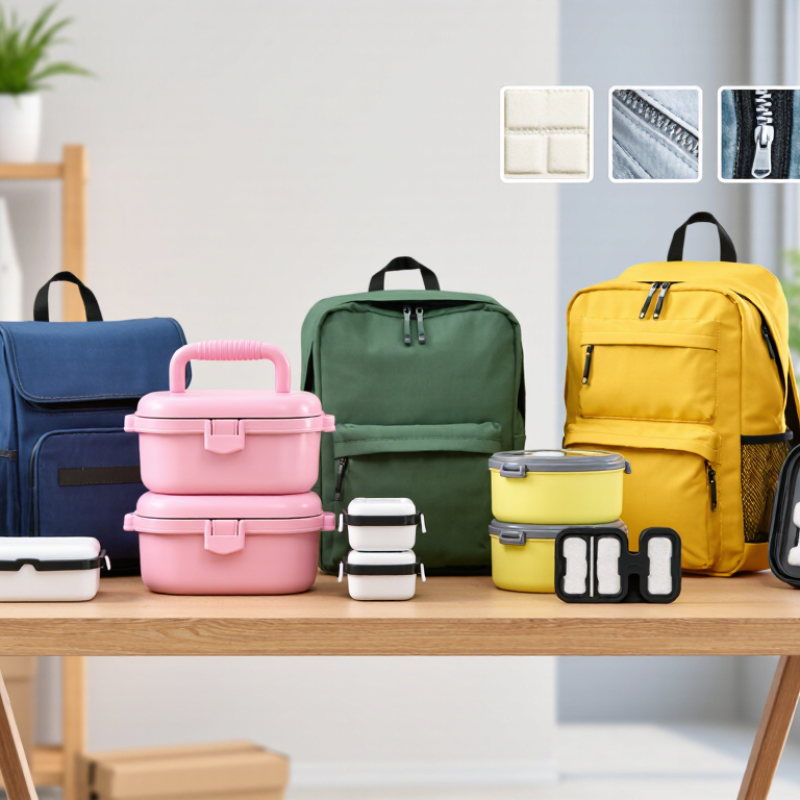
7 Best Lunch Box With Backpack Suppliers Worldwide?

What Is a Lunch Box With Backpack and Who Needs One?

A lunch box with a backpack is a portable meal container built into, or carried inside, a small daypack. It usually includes an insulated compartment, food-safe containers, a drink holder, and separate storage for utensils. The backpack design keeps both hands free during school trips, commuting, or outdoor activities. A useful model should feel balanced when filled.

Children often need one for school lunches, especially when they carry books and sports clothing. The shoulder straps should be padded and adjustable. The chest area should not feel tight. Parents should also check whether the lining wipes clean after yogurt or fruit spills. Small details matter.

Office workers can use this format for meals, snacks, and a reusable bottle. Delivery riders, hikers, and travelers may also prefer it because food stays organized during movement. Insulation helps maintain temperature, but it does not replace safe food handling. Perishable meals still need suitable cooling time and storage. Check the seams, zipper strength, and container fit before regular use. I would not choose a bag based only on appearance. A bright design can hide weak stitching, and even a spacious compartment may be uncomfortable when fully loaded.

Lunch Box With Backpack: Typical Capacity by User Need

A lunch box with backpack combines an insulated food compartment with shoulder straps, making it useful for carrying meals, drinks, and small personal items hands-free.

The reference capacities below reflect practical product-sizing ranges commonly used for different daily needs. Children generally need compact 4–6 L bags, while office meals, meal preparation, and outdoor use may require 8–15 L.

Capacity is measured in liters (L); figures are practical reference specifications rather than supplier or brand sales data.

Key Factors for Evaluating Global Lunch Box Backpack Suppliers

Choosing among lunch box backpack suppliers requires more than comparing catalog photos and unit prices. Start with material transparency. Ask for fabric composition, insulation details, zipper specifications, and food-contact safety documents. A reliable supplier should explain where materials come from and how production batches are checked. Request recent factory audit records, sample reports, and clear quality tolerances. Vague answers are warning signs.

Test a physical sample before discussing large orders. Fill the lunch compartment with a chilled container, place it inside the backpack, and carry it for several hours. Check leakage resistance, stitching, strap comfort, odor, and temperature retention. Small details matter. The zipper may catch. The lining may wrinkle after cleaning. These flaws are easy to miss in photographs. I once focused too heavily on appearance and overlooked weak shoulder seams, a costly mistake during later use.

Global suppliers should also demonstrate stable capacity and practical export experience. Review minimum order quantities, sample charges, production schedules, packaging methods, and replacement policies. Ask how they handle color variation and delayed materials. Communication quality is measurable: capable teams provide dated answers, test evidence, and revised documents. Sustainability claims deserve the same scrutiny. Look for verifiable certifications rather than attractive wording. A supplier may offer excellent samples but struggle with repeat production, so compare several batches when possible. Reliability is proven over time, not promised in one meeting.

7 Best Lunch Box With Backpack Suppliers Worldwide? - Key Factors for Evaluating Global Lunch Box Backpack Suppliers

Supplier Profile Region Typical MOQ Common Product Materials Customization Options Sample Lead Time Bulk Production Lead Time Quality and Compliance Evidence to Request Best Fit Evaluation Score
Profile 1 East Asia 500–1,000 units 600D polyester, PEVA lining, aluminum foil insulation, YKK-compatible zippers Logo printing, woven labels, color matching, pocket layout, hangtags, retail packaging 7–12 days 25–40 days after approval Material test reports, colorfastness results, factory audit, pre-shipment inspection Large-volume retail and promotional programs High potential
Profile 2 South Asia 300–800 units Cotton canvas, recycled polyester, PEVA or TPU-lined compartments Embroidery, screen printing, custom webbing, internal dividers, fabric selection 10–15 days 30–50 days after approval Fiber-content declaration, restricted-substance testing, needle-control procedure, social audit Eco-focused collections and mid-size orders Strong potential
Profile 3 Southeast Asia 500–1,500 units Ripstop polyester, nylon, PEVA insulation, EVA padding All-over sublimation, molded zipper pulls, size variations, packaging customization 8–14 days 28–45 days after approval ISO 9001 evidence, seam-strength testing, insulation performance data, inspection records School, travel and outdoor lunch backpack ranges High potential
Profile 4 Eastern Europe 200–600 units Polyester, recycled fabrics, food-contact-compatible lining materials Small-batch colorways, private labels, pattern adjustments, packaging inserts 7–14 days 20–40 days after approval EU chemical compliance documentation, food-contact declarations where applicable, factory traceability European buyers requiring shorter replenishment cycles Good potential
Profile 5 Western Europe 100–500 units Recycled polyester, organic cotton, PEVA, low-impact trims Sustainable material programs, minimalist branding, custom dimensions, premium packaging 10–18 days 30–55 days after approval Recycled-content certificate, chemical compliance file, sustainability claims verification, quality audit Premium and sustainability-led brands Good potential
Profile 6 North America 100–400 units Nylon, polyester, PEVA, foam insulation and reinforced webbing Domestic design support, custom labeling, retail-ready packaging, small-run modifications 5–12 days 20–45 days after approval Product safety documentation, labeling review, supplier insurance, third-party inspection Smaller orders, rapid sampling and local support Good potential
Profile 7 Latin America 200–700 units Polyester, cotton blends, PEVA insulation, EVA or polyethylene padding Local-market sizing, embroidery, printed panels, color customization, basic private labeling 10–16 days 25–50 days after approval Material specifications, production-capacity proof, social-compliance documentation, final inspection report Regional distribution and moderate-volume replenishment Good potential
Evaluation note: The figures above are practical industry benchmarks for comparing anonymous supplier profiles, not verified quotations from specific companies. Confirm MOQ, certifications, material safety, production capacity, Incoterms, shipping costs and inspection results before placing an order.

Seven Leading Lunch Box Backpack Suppliers Worldwide

Seven leading lunch box backpack suppliers worldwide serve different purchasing needs, from school programs to office meal campaigns. An established OEM supplier in China often offers broad customization and competitive minimum orders. A Vietnamese manufacturer may attract buyers seeking lightweight stitching and flexible production. Recycled-fabric specialists in India provide practical options for sustainability-focused projects, although material consistency needs close inspection.

A European food-contact packaging supplier can be valuable when buyers require detailed compliance records and clean finishing. A Turkish custom supplier often supports promotional orders with printed panels and organized sampling. In Mexico, export-oriented factories may reduce delivery time for buyers serving North American markets. A Portuguese small-batch workshop can suit premium collections, but its capacity may be limited. That matters.

Reliable sourcing requires more than attractive product photos. I recommend requesting a physical sample, fabric composition, insulation data, zipper specifications, and factory audit records. Check whether the lining resists leaks and whether the shoulder straps remain comfortable after several hours. Ask for test reports covering food-contact safety, colorfastness, and stitching strength. Requirements differ by destination, so local verification remains essential.

Some suppliers promise fully recyclable construction, yet mixed materials can make recycling difficult. That claim deserves questions. I would also compare carton dimensions, replacement policies, production schedules, and communication speed. A supplier that answers technical questions clearly is often safer than one offering the lowest quotation. Samples can still mislead, because mass production may vary. Small pilot orders help reveal those weaknesses before larger commitments.

Product Quality, Customization, Pricing, and Minimum Order Comparison

7 Best Lunch Box With Backpack Suppliers Worldwide?

Supplier comparison should begin with product quality, not catalogue photos. A 2024 IMARC Group report estimates the global lunch box market will keep expanding through 2032, driven by reusable food storage and commuting habits. That growth increases supplier choice, but quality still varies. Ask for food-contact test reports, leak testing, zipper-cycle results, and insulation performance at 25°C. Stainless steel should resist corrosion, while fabric seams need reinforced stitching. A small defect becomes obvious after daily use.

Customization can include fabric color, molded logos, inner labels, bottle pockets, and thermal lining. However, extra features raise development costs. In my sourcing checks, simple color changes often require fewer approvals than a new mold. Pricing also depends on material thickness, packaging, printing, and inspection. A 2023 McKinsey packaging study notes that material cost volatility continues to affect reusable packaging prices. Request a complete quotation, including sampling, tooling, packaging, and shipping assumptions. The lowest unit price is rarely the lowest landed cost.

Tips: Compare three samples. Test them for seven days. Record odor, leakage, stitching, and cleaning time. Ask suppliers for ISO 9001 evidence and independent food-contact documentation. Typical minimum orders may range from 300 to 3,000 pieces, depending on customization. Smaller orders usually cost more per unit. This is inconvenient, but realistic. Check production capacity, sample approval procedures, and replacement policies before signing. Supplier audits remain valuable, even when paperwork looks perfect.

How to Select the Right Supplier for Your Business Needs

7 Best Lunch Box With Backpack Suppliers Worldwide?

How to Select the Right Supplier for Your Business Needs

Choosing among seven promising suppliers requires more than comparing catalog prices. Check how each supplier handles materials, stitching, insulation, and food-contact safety. Request samples before placing a large order. Open every zipper, inspect the seams, and test the box after repeated washing. Small defects often reveal weak production controls.

Ask for clear details about minimum order quantities, sample fees, production capacity, and lead times. A reliable supplier should explain these terms without vague promises. Review factory audit records, quality procedures, and relevant test reports. Confirm that the lunch box and backpack materials match your market’s safety requirements. Communication matters too. A twelve-hour time difference can become costly when urgent changes are needed.

Measure the sample yourself.

Compare insulation thickness, handle strength, and packing size. Suppliers may offer attractive customization, but complicated artwork can increase errors and delays. Discuss color consistency using physical references, not only digital images. I once trusted a polished sample too quickly; the bulk stitching was less precise. That mistake taught me to inspect production samples and approve a signed specification sheet. Price still matters, but low pricing may hide thinner fabric, weaker hardware, or limited after-sales support. Choose the supplier that can repeatedly meet your standards, not merely the one that answers fastest.

FAQS

What documents should a lunch box backpack supplier provide?

Ask for fabric composition, insulation details, zipper specifications, and food-contact safety reports. Recent factory audits and sample reports are useful. Vague answers deserve caution.

How should I test a physical sample?

Place a chilled container inside and carry the backpack for several hours. Check leakage, odor, stitching, strap comfort, and temperature retention. Test it properly.

Which small defects are easy to miss?

A zipper may catch, and the lining may wrinkle after cleaning. Weak shoulder seams can fail during daily carrying. Photos can deceive.

What customization options are commonly available?

Options may include fabric color, inner labels, bottle pockets, thermal lining, and molded logos. New molds usually require more approvals and development costs. Simple color changes are easier.

How can I compare supplier pricing fairly?

Request costs for samples, tooling, packaging, inspection, and shipping assumptions. Material thickness and printing can change the final price. The cheapest unit price may mislead.

What minimum order quantity should I expect?

Custom orders may require roughly 300 to 3,000 pieces. Smaller orders often cost more per unit. That is inconvenient, but realistic.

How can I evaluate production reliability?

Review production schedules, capacity, replacement policies, and material-delay procedures. Compare samples from several batches when possible. One excellent sample proves little.

What should I check before approving a global supplier?

Ask for dated answers, test evidence, and revised documents. Check color variation controls, packaging methods, and independent certifications. I once overlooked weak seams. That mistake was expensive.

Conclusion

A Lunch Box With Backpack combines insulated food storage with convenient shoulder or back carrying, making it practical for students, office workers, travelers, outdoor enthusiasts, and families. This guide explains how to assess international suppliers by examining material safety, insulation performance, stitching quality, durability, production capacity, communication, delivery reliability, and compliance with applicable product standards. It also introduces seven leading supplier categories and compares their product quality, customization options, pricing structures, and minimum order quantities.

The article further explores how businesses can choose the right supplier according to their target market, budget, branding requirements, order volume, and preferred product design. Buyers should consider whether a supplier can provide different sizes, compartments, colors, closures, packaging, and logo applications while maintaining consistent quality. By balancing cost, customization, responsiveness, and long-term reliability, companies can select a suitable partner and develop lunch-carrying products that meet customer expectations in different markets.

Oliver

Oliver

Oliver is a seasoned marketing professional with a wealth of expertise in driving brand awareness and engagement. With a deep understanding of our company's product offerings, he consistently delivers high-quality content that enriches our professional blog. His insights not only shed light on......