Choosing the right Multilayer Food Container supplier in China takes more than comparing unit prices. These containers must protect food, resist leaks, and maintain reliable seals during filling, storage, and transport. A sample may look sturdy on a desk but fail when stacked in a warm warehouse. Details matter.
Industry reports show why packaging choices deserve careful review. UNEP’s 2023 report, Turning off the Tap, estimates that packaging accounts for 36% of all plastics produced. The OECD’s Global Plastics Outlook (2022) identifies packaging as the largest source of plastic waste, at about 40%. These figures do not describe multilayer food containers alone, but they underline the need to check material design and end-of-life claims. Food-packaging scientist Dr. Jane Muncke of the Food Packaging Forum has highlighted a related concern: chemicals from food-contact materials may migrate into food. Treat that as a reason to request clear material specifications and appropriate test documentation, not as proof that every container poses a risk.
This guide examines how to assess Chinese suppliers by reviewing layer structure, sealing performance, production consistency, customization, and quality records. Ask for specifications. Check the sample. Confirm that reported test results match the exact product being offered. A polished catalog is not enough. Supplier claims still need scrutiny, and even a strong factory can make mistakes. The aim is not to declare one universal “best” supplier, but to help buyers identify a dependable fit for their product, process, and market.
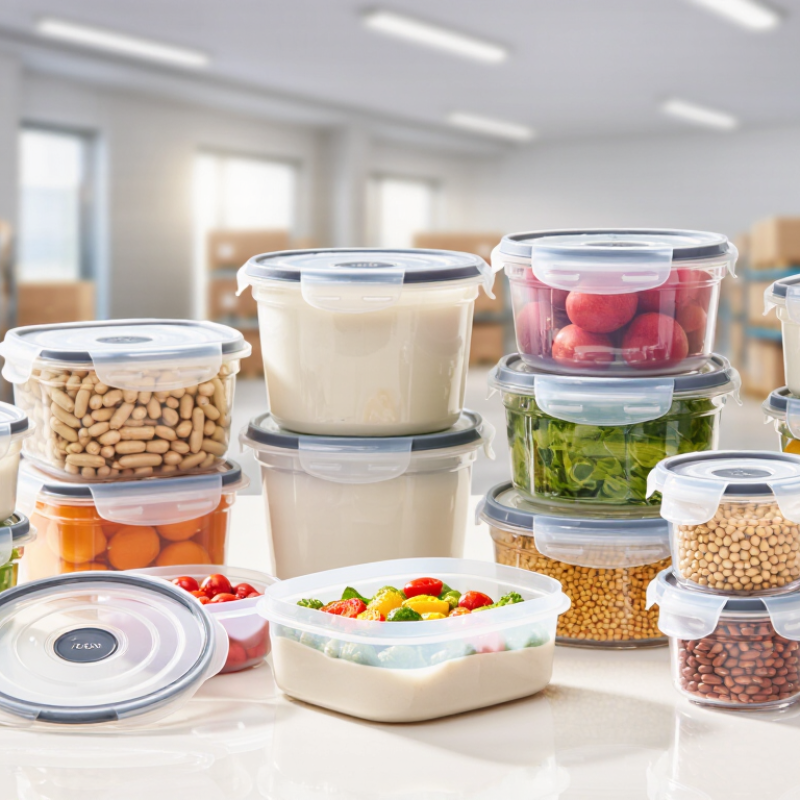
A multilayer food container combines two or more materials to balance protection, strength, and convenience. A common structure places a thin barrier layer between plastic layers; other formats pair paperboard with polymer or foil. Each layer has a job. The inner surface contacts the food, while the barrier can slow oxygen or moisture transfer. A rigid tray may hold a chilled meal; a sealed cup can protect yogurt during storage and transport. That sounds simple. It isn’t. Material choice depends on the food, filling temperature, storage period, and sealing process. A container suited to dry snacks may not protect a moist meal equally well.
Multilayer containers are used for ready meals, dairy products, sauces, and other foods needing reliable seals or extended protection. FAO’s 2023 food-and-agriculture SDG progress report estimated that 13.2% of food was lost between harvest and retail in 2021. Packaging is only one part of reducing losses, but suitable barriers can help preserve quality in distribution. There is a trade-off. The OECD’s Global Plastics Outlook reported that only 9% of plastic waste was recycled worldwide in 2019, underscoring the importance of considering end-of-life options alongside performance. Buyers should check the container’s food-contact specifications, barrier data, and compatibility with local collection systems. Ask for test results. A layered design can protect food well, yet its materials may be difficult to separate; that limitation deserves honest review.
The inner layer may touch the food. Outer layers can add stiffness or improve printing. A barrier layer may help limit moisture or odor transfer. Small details matter.
Measured materials enter a forming line. Heat and pressure shape them, then trimming creates clean edges. Seals and walls are checked for leaks, uneven thickness, and visible defects. Not every batch is identical.
Polypropylene and polyethylene are common options. But a resin name alone cannot confirm safety. The finished container, lid, colorants, and joining materials should also be considered.
Ask for reports covering the complete container, intended food, temperature, and contact time. For reusable containers, check whether repeated washing is included. Generic reports may have a narrow scope.
Try a sample with the actual food and filling process. Inspect the rim, corners, and lid fit. A container may look sturdy on a desk but flex when stacked.
No. Check the stated temperature limits and intended use. After heating as directed, inspect for warping or unusual odor. I would not guess from appearance.
Look for uneven walls, sharp edges, warped rims, and leaks after filling. A simple water test can help check the seal. Small flaws can matter.
Ask how layer bonding and sealing are monitored. Request traceable material records and recent samples. A polished factory tour is not proof of consistency.
Put critical dimensions and acceptance criteria in writing. Compare lead times with sample approval, tooling, and packaging schedules. I might still miss a detail, so review the final sample carefully.
A Multilayer Food Container combines several layers of material to help protect food, retain freshness, and suit different storage or transport needs. Its structure and shape are designed around the intended use, such as holding hot meals, chilled foods, or portioned products. Manufacturing typically involves selecting compatible materials, forming each layer, joining them securely, and checking that the finished container performs consistently. Buyers should consider food-contact suitability, heat and moisture resistance, durability, and clear quality-control documentation when reviewing materials and safety standards.
When evaluating suppliers in China, buyers can compare manufacturing capabilities, production consistency, communication, customization options, lead times, and sample quality. Strong suppliers explain their processes clearly, provide relevant test information, maintain reliable inspection procedures, and respond promptly to questions. A careful comparison helps buyers identify a partner that can meet product requirements and support dependable, long-term supply.

 Dadi Plastic