Choosing the best School Food Container starts with a real lunch, not a product photo. Picture a child opening it at a crowded table. Can small hands lift the lid? Does yogurt stay in its compartment when the backpack tips? Will the container fit beside a water bottle? These details matter more than a long feature list.
A practical guideline from fictional composite specialist Maya Ellis is: “Choose a container that a child can open, carry, and clean with confidence.” This is an editorially created quote, not a verified statement from a real expert. Treat it as a useful test, not a product guarantee. Check the maker’s care instructions, inspect hinges and seals, and look for materials clearly identified for food contact. If possible, let the student try the lid before buying. Small fingers can struggle with stiff clasps.
The right choice depends on age, appetite, and the food being packed. A divided box may keep apple slices apart from crackers, while a leak-resistant cup can help with dressing or yogurt. But more compartments can mean more corners to wash. There is a trade-off. Think about daily cleaning, too: a container that is difficult to dry may not suit a rushed school morning. No single design works for every family. Compare size, weight, durability, and ease of use against the lunch routine you actually have—not an ideal one.
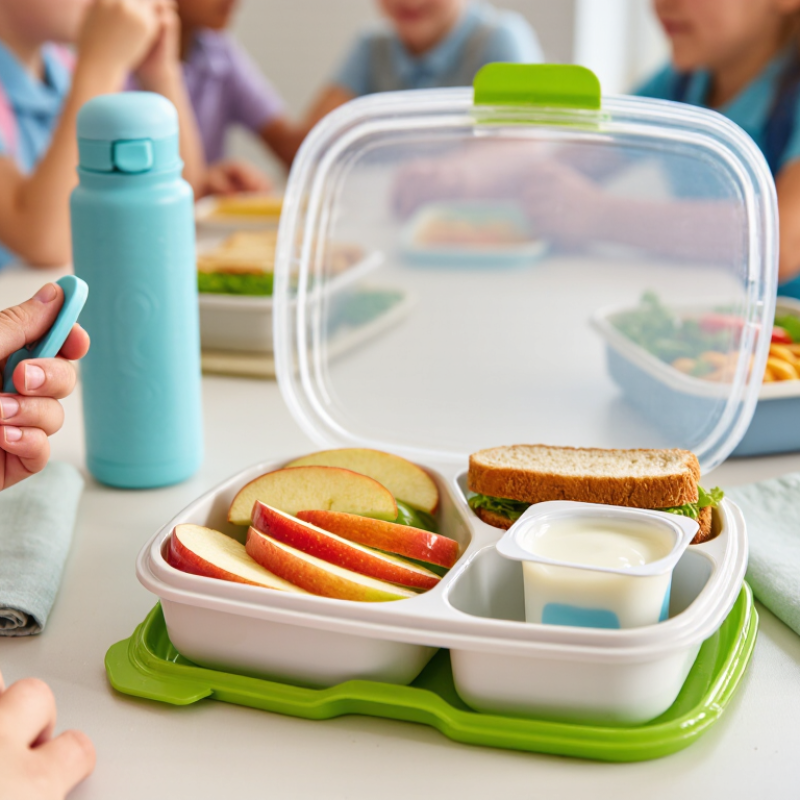
Start by deciding what the school meal contains. A cheese sandwich, yogurt, cut melon, or cooked leftovers are perishable foods. Crackers and whole fruit are generally easier to pack without chilling. This distinction matters more than the container’s appearance. A roomy container may fit everything, but it cannot keep food safely cold by itself.
USDA guidance says perishable food should not remain at room temperature for more than two hours. On days above 90°F, the limit is one hour. Pack cold foods with frozen ice packs in an insulated lunch bag, and keep the bag out of direct sunlight. The goal is to hold food at 40°F or below. A small food thermometer can check whether your setup works; guessing is not always reliable. Keep perishables separate from shelf-stable snacks, and follow the school’s storage rules. If lunch sits in a warm classroom, rethink the plan. I sometimes underestimate how quickly a bag warms up. That detail is easy to miss.
Choosing a school food container starts with checking whether its materials suit the foods and conditions it will encounter. FDA 21 CFR Parts 174–179 cover many substances used in food-contact applications, including polymers, paper and paperboard, adhesives, and processing aids. A reference to one part does not automatically establish that every finished container is suitable. Ask for documentation covering the specific material, intended use, and any temperature or food-type limits. Check whether it applies to hot meals, acidic sauces, repeated use, and normal washing. Small details matter.
A container might hold warm pasta, sliced citrus, or yogurt beside a lid seal for several hours. Those uses may differ from storing dry crackers. Look for written information identifying the relevant CFR section and its conditions of use; “food safe” alone leaves questions unanswered. Check the whole assembly, including the body, lid, gasket, colorants, and coatings. They may be made from different materials. Try the container with water, then inspect it after ordinary cleaning for leaks, odors, cracks, or warped edges. Not glamorous, but useful. Regulations help guide material selection, while small hands, crowded backpacks, and hurried lunch breaks reveal whether the design works in practice.
Choose insulation by the food’s holding temperature, not by a lunchbox’s marketing claim. The FDA Food Code 2022, section 3-501.16, sets cold holding at 41°F or below and hot holding at 135°F or above. These are food-holding limits, not guarantees that any insulated container will meet them. A chilled yogurt beside a warm sandwich can lose its cool quickly.
The CDC’s 2011 U.S. estimates link foodborne agents to about 48 million illnesses, 128,000 hospitalizations, and 3,000 deaths each year. These figures are not specific to school lunches, but they show why safe handling matters. For cold meals, pre-chill the container and pack frozen gel packs close to the food; USDA FSIS recommends two cold sources in insulated lunch bags. For soup, preheat a vacuum flask with boiling water, empty it, then add piping-hot food. At lunch, check again.
A steel shell may look reassuring, but appearance cannot confirm safe temperatures. I would trust a thermometer check more than an “all-day” claim. Test the packed meal after the actual commute and classroom wait, using the portion size and fill level your child will carry. One test may not reflect every season or schedule. Worth the extra minute.
A useful school container should fit the meal, not just the backpack. Match its capacity to the student’s usual portions and the lunch bag’s interior dimensions. A sandwich, sliced fruit, and a small snack need room without being crushed. Compartments can keep crackers crisp and fruit separate, but too many may waste space. Check that the dividers are sealed if sauces or juicy foods are packed.
Leak resistance matters on crowded school days. Look for a secure lid and a gasket that sits flat all around the rim. At home, test the closed container with water over the sink; a quick shake can reveal weak spots. It is a simple check, not a guarantee. A lid that is difficult for a child to open may also turn a good lunch into an untouched one.
Temperature matters, too. The USDA Food Safety and Inspection Service advises discarding perishable food left at room temperature for over two hours, or one hour above 90°F. The FDA 2022 Food Code sets cold holding at 41°F or below. These figures support packing chilled foods with an insulated lunch bag and cold source. For warm meals, choose an appropriately insulated container and follow its care instructions. Test the routine before a busy morning. A small leak can happen. Check seals and hinges regularly, since wear is easy to overlook.
How to Choose the Best School Food Container?
A school food container gets handled in a hurry: opened at lunch, tucked into a crowded bag, and washed again at night. Choose a shape with wide corners and few narrow grooves, where crumbs and sticky sauce are easier to reach. Small details matter. A removable seal can help with cleaning, but only if it comes out easily and fits back without twisting.
Check the care instructions before buying. Some containers tolerate a dishwasher; others may need gentle hand-washing to protect their lids or seals. Check the seal. Wash it separately when possible, then let every part dry fully before reassembling. Trapped moisture can leave an unpleasant smell. It is easy to miss the underside of a lid, especially on a busy evening.
Durability is more than a tough-looking shell. Look for sturdy hinges, a lid that closes securely, and materials that do not feel flimsy when pressed. Rounded edges may show wear less obviously than glossy surfaces, though scratches are still normal with daily use. A container can be durable and still become annoying if its latch is difficult for a child to manage. Test the opening and closing motion, and consider whether the parts are simple enough to clean without special tools. The perfect option is not always the one that lasts longest; it should also be practical to wash and use every day.
| Container Type | Typical Cleaning Needs | Everyday Durability | Leak Resistance | Best For | Things to Check Before Buying |
|---|---|---|---|---|---|
| Stainless steel lunch box | Usually easy to hand-wash; some models have dishwasher-safe parts. Dry thoroughly to help prevent water spots. | Resists stains and odors, but dents can occur if dropped. Lids and seals may wear over time. | Varies by lid design; a tight-fitting lid with a sound gasket is important. | Dry foods, sandwiches, fruit, and families seeking a sturdy reusable option. | Confirm whether the lid is leak-resistant, which parts are dishwasher-safe, and whether compartments are removable. |
| Reusable plastic container | Many are dishwasher-safe, but check the care instructions. Stains and lingering odors may develop with some foods. | Lightweight and generally resistant to shattering; can scratch, warp, or crack with repeated use or heat. | Depends on the lid and sealing design; not all containers are suitable for liquids. | Light school bags, snacks, and everyday portions where low weight matters. | Look for food-contact suitability, a secure lid, clear care instructions, and any stated microwave-use limits. |
| Glass container with protective sleeve | Glass is generally easy to clean and resists food odors; lids and seals may need separate washing. | Does not usually stain easily, but can chip or break if dropped. A sleeve may help protect it but cannot make it unbreakable. | Often good with a well-fitting gasket, but performance varies by lid construction. | Older students or situations where the container can be carried carefully. | Check the weight, breakage precautions, lid care, and whether the container is intended for the way it will be heated. |
| Silicone food pouch or collapsible container | Flexible surfaces are usually easy to rinse; seams, corners, and closures need careful cleaning and drying. | Flexible and resistant to shattering, but thin sections or closures can wear or tear with frequent use. | Depends on the closure; test with the intended foods before packing liquids in a school bag. | Soft snacks, sandwiches, or saving storage space when empty. | Check whether it opens wide enough to clean, whether it is dishwasher-safe, and how the closure should be secured. |
| Insulated food jar | Wash the interior, lid, and removable gasket separately; dry all parts fully before reassembling. | The insulated body is usually sturdy, though dents can affect appearance and lids or seals can wear. | Often designed for soups or other moist foods when properly closed; a worn or misplaced gasket can cause leaks. | Warm foods or chilled foods that need more temperature retention than a standard lunch box provides. | Check the capacity, lid assembly, cleaning access, and the manufacturer’s instructions for food temperature and use. |
Selection tip: For daily school use, prioritize easy-to-clean corners, a lid children can open and close, a secure seal, and a size that fits the lunch bag. Dishwasher, microwave, and temperature-use instructions vary by product, so check the care label before use.
Cheese sandwiches, yogurt, cut melon, and cooked leftovers are perishable. Crackers and whole fruit are usually easier to pack without chilling.
Keep it out for no more than two hours. Above 90°F, reduce that limit to one hour. Time adds up quickly.
Use an insulated bag with frozen ice packs close to the food. Two cold sources can help. Keep the bag out of direct sunlight.
Aim for 40°F or below. Food-service cold holding limits may allow up to 41°F. A thermometer is more reliable than guessing.
Preheat a vacuum flask with boiling water. Empty it, then add piping-hot soup. Check the temperature at lunchtime when possible.
No. A steel shell or roomy lunchbox cannot prove food stayed cold or hot. Looks can be misleading.
Check the packed meal after the real commute and classroom wait. Use the usual portion and fill level. One test may not cover every season.
Reconsider packing perishables without reliable cold sources. I can underestimate how fast a bag warms up. That detail is easy to miss.
Choosing the right School Food Container starts with understanding the meal it needs to hold. Identify whether the food is perishable, then plan how it will stay safe until lunchtime. Perishable foods should not remain unrefrigerated for more than two hours, so use suitable cold packs or insulated storage when needed. For hot or cold meals, choose insulation that can help maintain the applicable food-safety temperatures: cold foods at or below 41°F and hot foods at or above 135°F.
Select food-contact materials intended for food use and covered by relevant FDA regulations, including 21 CFR Parts 174–179. Choose a capacity and compartment layout that fit the student’s meal, and look for a secure, leak-resistant closure to keep foods separate and reduce spills. Finally, consider everyday practicality: smooth surfaces and removable parts make cleaning easier, while sturdy construction helps the container withstand repeated school use.

Dadi Plastic