A Lunch Box Set With Water Bottle is more than a matching container and drink flask. It is a daily system for carrying food, hydration, and routine in one compact package. Picture a child opening a box at noon: sliced fruit in one compartment, a sandwich beneath a secure lid, and a cool bottle beside it. Small details matter.
The CDC estimates that 48 million Americans experience foodborne illness each year. Its food-safety guidance recommends keeping perishable foods cold and washing hands before preparation. The USDA Food Safety and Inspection Service also advises using insulated lunch bags and ice packs. Food should not remain in the temperature danger zone for long. According to Grand View Research’s 2024 reusable food-container analysis, demand is being supported by convenience, sustainability, and reduced reliance on disposable packaging. The market is growing. But growth does not guarantee quality.
Food-safety expert Dr. Donald W. Schaffner emphasizes, “Food safety is a shared responsibility from farm to fork.” That principle applies inside every lunch bag. A well-designed Lunch Box Set With Water Bottle should offer leak resistance, easy cleaning, durable materials, and practical portion control. Stainless steel may handle repeated use well, while lightweight plastics can reduce carrying strain. Neither option is automatically perfect. Seals can weaken. Bottles can retain odors. Compartments may be too shallow for real meals. This guide examines those trade-offs with a practical lens, using safety guidance, market evidence, and everyday packing experience. A beautiful set is useful only when people actually use it.
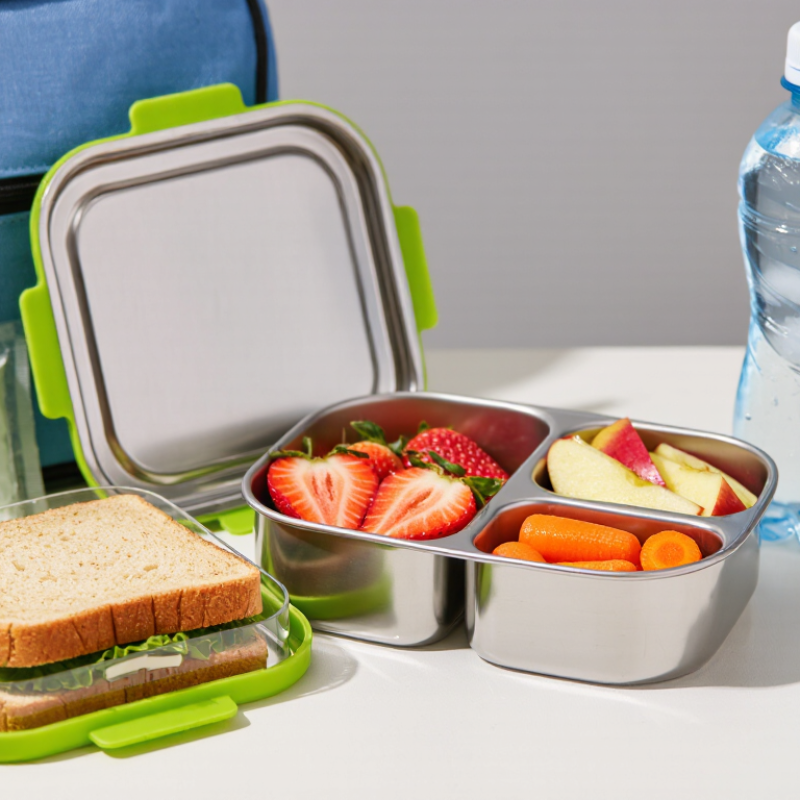
A lunch box set with water bottle is a matched meal-carrying kit. Usually, it combines a food container, reusable bottle, and outer case. The parts fit together for school, work, commuting, or short trips.
A useful set should separate wet foods from dry foods. It should also open easily with clean hands. Small details matter. A wide bottle mouth helps cleaning. A firm seal protects books from soup and fruit juice. An adjustable handle makes crowded commutes easier.
A wide bottle mouth helps cleaning.
A firm seal protects books from soup and fruit juice.
An adjustable handle makes crowded commutes easier.
Demand for reusable hydration products supports this format. Grand View Research valued the global reusable water bottle market at USD 8.35 billion in 2022. The report projected a 4.8% annual growth rate through 2030. This suggests sustained interest, but it does not prove every set performs well.
The USDA FSIS advises keeping perishable food at 40°F or below. It also recommends using two cold sources in an insulated lunch container. Therefore, insulation and a cold pack matter more than decorative compartments. A bottle alone cannot keep food safe.
Some sets also feel bulky when fully packed. That weakness is easy to miss in product photographs. A careful choice should consider capacity, cleaning access, leak resistance, and the user’s daily carrying routine.
A lunch box set with water bottle usually combines a carry case, food containers, a reusable bottle, utensils, and a cooling element. The lunch case should have insulation, a firm zipper, and enough room for containers without crushing fruit. Containers may include one large compartment for sandwiches and smaller sections for vegetables, snacks, or yogurt. A leak-resistant seal matters.
The United States Department of Agriculture advises keeping perishable food cold with two cold sources. It also recommends discarding such food after two hours at room temperature. A reliable set, therefore, may include an ice pack and an insulated liner. The bottle should have a secure cap, a wide opening, and clear volume markings. These small details make cleaning and hydration easier. ReFED’s Insights Engine estimates that about 38% of food in the United States is wasted. Portion-sized containers can reduce untouched leftovers, although household habits still matter more than attractive packaging.
Tips: Choose containers that fit the case tightly. Test the seal with water before packing soup. Use stainless steel or food-grade plastic with clear care instructions. Wash the bottle daily, especially around the cap and silicone ring. Avoid packing too much. I often do. A simple napkin, fork, and name label also belong in the set, because missing basics can turn a practical lunch into an inconvenient one.
What Is a Lunch Box Set With Water Bottle?
How Does a Lunch Box Set With Water Bottle Work?
A lunch box set with a water bottle combines two daily essentials in one portable design. The lunch compartment holds food, while the bottle carries water or another suitable drink. Many sets use an insulated lining to slow heat transfer. This helps food stay cooler or warmer for several hours, depending on the outside temperature and packing method. It does not replace a refrigerator.
The bottle usually sits in a separate sleeve or side pocket. This arrangement reduces pressure on sandwiches, fruit, and other soft foods. A tight cap helps prevent leaks, but no closure is perfect when the bottle is overfilled. Leave a small air space. I once packed a bottle horizontally, and a loose cap dampened the napkins inside. That mistake changed how I check every seal.
Using the set is simple. Cool food should go in chilled, sealed containers, while hot food needs a heat-safe container. Ice packs can support cooling, but they should not touch uncovered food directly. The bottle should be washed after each use, especially after flavored drinks. Insulated fabric also needs regular wiping because crumbs and moisture can collect in hidden seams. One weakness remains: a compact set may feel convenient but offer limited space for larger meals. Measuring the lunch container and bottle before purchase prevents an awkward fit.
What Is a Lunch Box Set With Water Bottle?
A lunch box set with a water bottle combines portable food storage and hydration in one daily kit. Common materials include stainless steel, polypropylene, silicone, and glass. Stainless steel offers strong impact resistance and helps reduce odor retention. Polypropylene is lightweight and handles repeated washing well. Silicone usually appears in seals, folding parts, and leak-resistant lids.
According to Grand View Research’s 2024 reusable water bottle market report, the sector is projected to grow steadily through 2030, supported by demand for reusable products. This trend also influences lunch box design. Buyers increasingly expect BPA-free food-contact materials, secure closures, and long service life. Good sets often include insulated walls, separate food compartments, removable seals, and wide bottle openings. Small details matter.
A tight seal is essential. Nobody wants soup inside a schoolbag. In practical testing, silicone gaskets can trap food residue if users do not remove them regularly. That is an overlooked weakness. The U.S. Department of Agriculture advises keeping perishable foods cold, so an insulated lunch box should be paired with an ice pack when needed. Some product reports, including analyses from Mordor Intelligence, identify insulation and modular storage as important market features. Still, insulation does not replace safe temperature control. A set may look durable, yet hinges and seals often fail first. Check those parts before buying.
What Is a Lunch Box Set With Water Bottle?
How Should You Choose and Maintain the Set?
A lunch box set with a water bottle should support safe, practical daily eating. Choose a leak-resistant lunch box with a firm seal, rounded corners, and enough space for separate containers. The bottle should have a wide opening, a secure cap, and parts that can be removed for cleaning. Stainless steel or food-grade plastic can work well. Check the product’s material information carefully.
Size matters more than appearance. A compact set fits better in a school bag or office drawer. However, a box that is too small may crush fruit and sandwiches. I prefer a set with one large section and two smaller sections. It keeps wet and dry foods apart. I still sometimes pack too much. That mistake makes the lid difficult to close.
The U.S. Department of Agriculture’s Food Safety and Inspection Service advises discarding perishable food left unrefrigerated for over two hours. Above 90°F, the limit becomes one hour. Use an ice pack when meals contain meat, eggs, dairy, or cooked vegetables. Wash the lunch box and bottle after every use with warm water and dish soap. Clean the cap threads, gasket, and drinking spout carefully. The Centers for Disease Control and Prevention recommends regular cleaning of reusable water containers. Allow every part to dry fully before assembly. Moisture trapped inside can create unpleasant odors. Inspect seals each week. Replace damaged parts, even if the set still looks usable.
| Data Dimension | Common Specification or Option | Practical Benefit | Recommended Choice | Maintenance Guidance |
|---|---|---|---|---|
| Lunch Box Capacity | Approximately 600–1,200 ml | Provides space for a main meal, side dish, fruit, or snack without being unnecessarily bulky. | Choose 800–1,000 ml for most school-age children and adults with moderate meal portions. | Avoid overfilling so the lid can close securely and the seal remains effective. |
| Water Bottle Capacity | Approximately 350–750 ml | Supports regular hydration during school, work, commuting, or short outdoor activities. | Select 500–750 ml when refilling opportunities are limited; choose 350–500 ml for younger children or lighter loads. | Empty and rinse the bottle daily. Clean the cap, straw, and gasket separately when applicable. |
| Lunch Box Material | Food-grade stainless steel, polypropylene, or other food-contact plastic | Materials designed for food contact can offer durability, stain resistance, or reduced weight depending on the type. | Use stainless steel for durability and odor resistance; use food-grade plastic when low weight and microwave compatibility are priorities. | Check the product instructions before using a microwave, dishwasher, or freezer. Do not microwave metal containers. |
| Bottle Material | Stainless steel, glass, or food-grade plastic | Stainless steel is durable, glass is easy to inspect and clean, and plastic is generally lightweight and impact-resistant. | Choose the material according to weight, breakage risk, insulation needs, and intended age group. | Replace the bottle if it develops cracks, deep dents, a damaged interior coating, or a persistent odor. |
| Insulation Performance | Single-wall, insulated, or vacuum-insulated construction | Insulated designs help slow temperature changes and can keep beverages or food more comfortable to consume. | Choose insulated construction for commuting, travel, or outdoor use; use a non-insulated set for short periods and lighter weight. | Pre-chill or pre-warm the container when appropriate, and do not rely on insulation to replace safe food storage practices. |
| Compartment Design | Single compartment, divided compartments, or removable inner containers | Separate sections can help prevent dry and moist foods from mixing and make portion organization easier. | Select leak-resistant compartments when carrying sauces, fruit, or other moist foods. | Remove dividers and inner trays after use so food residue does not remain in corners or underneath seals. |
| Leak Resistance | Basic lid, silicone gasket, locking clips, or leak-resistant inner containers | A secure closure reduces spills inside bags and helps preserve food quality during transport. | Choose a gasketed lid with reliable locking points for liquid-rich foods or soups. | Inspect seals regularly. Wash them separately, dry them fully, and replace them when they become loose, cracked, or deformed. |
| Portability | Compact shape, carrying handle, detachable strap, or matching storage bag | Coordinated components are easier to carry and can help keep the lunch box and bottle together. | Choose a lightweight set that fits comfortably inside the intended backpack, work bag, or travel bag. | Do not carry the set by a lid or strap unless that part is specifically designed to support the full load. |
| Cleaning Compatibility | Hand-wash only, top-rack dishwasher safe, or dishwasher-safe components | Cleaning compatibility affects convenience, durability, and the risk of damage from heat or detergents. | Prefer dishwasher-safe parts for convenience, while following the manufacturer’s instructions for seals, coatings, and insulated components. | Wash the set as soon as possible after use, use mild detergent, and leave every part open to air-dry completely. |
| Food Safety | Use clean containers and control time and temperature | Proper handling helps reduce the risk of foodborne illness, especially for perishable meals. | Pack chilled food with a cold source when needed and avoid leaving perishable food at room temperature for extended periods. | Discard food that has an unusual smell, appearance, or texture. Clean the container before packing a new meal. |
| Best Overall Selection Criteria | Capacity, materials, leak resistance, insulation, weight, and cleaning requirements | Considering these factors together helps match the set to daily routines rather than choosing by appearance alone. | Choose a durable, appropriately sized, easy-to-clean set with a secure seal and a bottle capacity suited to daily hydration needs. | Review the set regularly and replace damaged lids, bottles, containers, or seals instead of continuing to use unsafe components. |
It usually includes an insulated lunch case, food containers, a reusable bottle, utensils, and a cold pack. Some sets include napkins or labels. Check the actual contents before buying.
Use one large section for sandwiches and two smaller sections for fruit or snacks. Separate wet foods from dry foods. Tight-fitting containers prevent crushed food. Small details matter.
Look for firm seals, secure lids, and a strong zipper. Test each container with water before packing soup. A small leak can soak books quickly.
Choose a bottle with a wide opening, secure cap, and clear volume markings. A wide mouth makes cleaning easier. Check whether the cap and gasket come apart.
No. Use an insulated case with two cold sources for perishable food. Meat, eggs, dairy, and cooked vegetables need extra care. Insulation alone is not enough.
Discard perishable food after two hours at room temperature. In temperatures above 90°F, use one hour instead. When unsure, throw it away. Safety comes first.
Wash the lunch box and bottle after every use with warm water and dish soap. Clean the cap threads, gasket, and drinking spout carefully. Let every part dry fully.
Choose a compact set that fits inside a school bag or office drawer. It should still protect fruit and sandwiches from crushing. I often pack too much. That makes closing the lid harder.
A Lunch Box Set With Water Bottle is a convenient meal-carrying solution that combines a reusable lunch container with a matching bottle for drinks. A typical set may include one or more food compartments, a leak-resistant lid, a water bottle, utensils, and sometimes a carrying bag or insulated pouch. Together, these items help organize meals, snacks, and beverages in one portable package, making it suitable for work, school, travel, or outdoor activities.
These sets commonly use materials such as food-grade plastic, stainless steel, silicone, or insulated fabric. Useful features may include secure closures, separate compartments, easy-clean surfaces, insulation, and bottles with spill-resistant caps. When choosing a set, consider its capacity, durability, portability, cleaning requirements, and whether the materials are suitable for hot or cold foods. To maintain it properly, wash each part after use, dry it completely, check seals and lids regularly, and follow the care instructions for the specific materials.

Dadi Plastic