How to Source Bulk Lunch Boxes in 2026?

Time:2026-10-26 Author:Sophia
0%

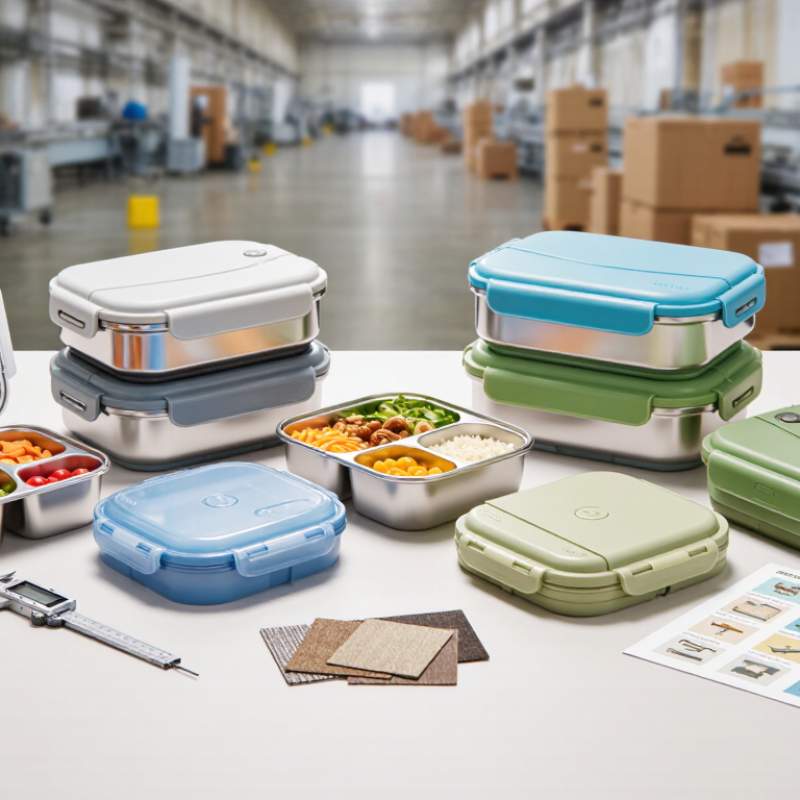
Sourcing Bulk Lunch Boxes in 2026 requires more than comparing factory prices. Buyers must balance food safety, durability, design, capacity, and delivery reliability. A low unit cost can become expensive after damaged samples, delayed production, or excessive packaging waste. Small details matter.

This guide explains how to evaluate suppliers with practical sourcing criteria. It covers material choices, leak-resistant lids, insulation performance, customization, minimum order quantities, and quality inspections. Stainless steel, BPA-free plastics, silicone seals, and recycled materials may serve different markets. Each option needs documented specifications and appropriate testing. Ask suppliers for recent product samples, factory details, test reports, and clear production timelines. Do not rely on attractive photos alone.

Supplier communication also deserves careful attention. Confirm dimensions in millimeters, carton quantities, logo placement, color references, and acceptable defect limits. A written purchase specification reduces misunderstandings between buyers and manufacturers. It also supports more consistent inspections before shipment. Costs should include tooling, packaging, freight, import charges, and possible rework. The cheapest quotation is rarely the complete business cost.

Market trends can change quickly. Reusable designs, compact compartments, and personalized branding may attract buyers in 2026. However, trends should not replace practical testing. A lunch box that looks modern may still stain, leak, or crack after repeated use. That possibility deserves honest consideration. Reliable sourcing combines supplier evidence, sample testing, transparent communication, and a realistic budget. This approach cannot remove every risk, but it can make purchasing decisions more defensible and dependable.
How to Source Bulk Lunch Boxes in 2026?

Define Your Bulk Lunch Box Needs and Buying Criteria

Define Your Bulk Lunch Box Needs and Buying Criteria

Bulk sourcing starts with the daily use case, not the lowest quotation. Estimate meals per day, serving size, storage temperature, and replacement frequency. A school program may need lightweight boxes, while factory workers may require larger, leak-resistant compartments. Measure the target food portions before requesting samples. Fit matters.

Grand View Research reported that the global food storage container market was valued at approximately USD 4.1 billion in 2023. Its analysis also expects continued growth through 2030. This supports demand, but it does not guarantee every lunch box will perform well. Define material requirements carefully, including food-contact documentation, odor resistance, heat tolerance, and dishwasher compatibility. Ask suppliers for independent test reports, not only internal claims.

Your buying criteria should include capacity, empty weight, closure strength, seal replacement options, carton dimensions, and minimum order quantity. Test samples with soup, rice, fruit, and a full day of handling. Check leakage after repeated opening. A box can pass one test and fail after a week. Include acceptable defect rates, inspection stages, delivery terms, and landed cost in the purchase file. I would also compare packaging waste, because cheap secondary packaging can increase disposal costs. No checklist is perfect. Revisit it after real users report cracked hinges, difficult cleaning, or portions that feel too small.

Identify Suitable Suppliers and Manufacturing Regions

How to Source Bulk Lunch Boxes in 2026?

Choosing a supplier starts with the product, not the lowest quotation. Define capacity, lid design, insulation, material, color, and expected order volume. Request samples from at least three factories. Test seal strength, hinge movement, odor, staining, and cleaning performance. Small failures become expensive at scale.

Manufacturing regions suit different sourcing priorities. China offers broad component networks and flexible customization. Vietnam may provide competitive assembly and growing export experience. India can support stainless steel production and varied packaging options. Turkey is useful for some European supply routes and shorter transit times. Regional strengths change quickly, so verify current capacity instead of relying on old market assumptions.

Ask each supplier for factory ownership details, production photos, material specifications, and recent test reports. Confirm whether testing covers food-contact safety, temperature resistance, and migration limits for your target markets. A video call can reveal storage conditions, inspection routines, and unfinished work. An independent factory audit adds evidence, though it does not remove every risk. Check carton dimensions and loading plans before approving the order. Freight costs often hide inside “competitive” prices.

Use a written quality agreement with measurable tolerances. Specify acceptable scratches, color variation, leakage rates, and inspection timing. Keep one approved sample as a reference. I have found that suppliers often promise faster production than their schedules support. Leave space for delays, rework, and port changes. Cheap tooling can also create uneven lids, and that lesson is easy to learn too late.

Compare Materials, Designs, Prices, and Minimum Order Quantities

How to Source Bulk Lunch Boxes in 2026?

Material affects cost, safety, weight, and customer perception. Food-grade polypropylene usually offers the lowest unit cost, often about US$1.20–3.00 at factory volume. Stainless steel can reach US$3.50–8.00, while glass adds weight and breakage risk. Prices vary sharply with lids, seals, printing, and packaging. The first quotation is rarely the real cost.

Design changes minimum order quantities. A standard rectangular box may start near 500–1,000 units. Custom molds can require 3,000–10,000 units, plus tooling fees. Stackable shapes reduce carton space. Silicone seals improve leak resistance, but they add assembly checks. Ask for migration tests, temperature limits, dishwasher guidance, and batch samples. One overlooked detail can create expensive returns.

Industry data supports careful material choices. The OECD Global Plastics Outlook reported that global plastic waste more than doubled from 2000 to 2019. The report also linked stronger reuse systems with lower waste pressure. Smithers’ Packaging Futures research values the global packaging market at over US$1 trillion, showing why small design decisions matter at scale. These figures do not measure lunch boxes directly. That limitation matters. Compare landed cost, not only factory price. A lightweight box with weak hinges may look cheaper, but its failure rate can erase the saving.

How to Source Bulk Lunch Boxes in 2026? - Compare Materials, Designs, Prices, and Minimum Order Quantities

Material Common Design Typical Capacity Key Features Indicative Bulk Price per Unit (USD) Typical MOQ Customization Options Best Use Case Durability / Reusability Important Sourcing Checks
Food-Grade PP Plastic Stackable bento box with 2–4 compartments 600–1,200 ml Lightweight, microwave-friendly when specified, economical, easy to mold $0.80–$2.80 300–1,000 units Color matching, lid printing, molded logo, compartment layout Schools, meal-prep programs, promotional giveaways High for normal daily use Confirm food-contact compliance, BPA status, heat resistance, lid seal, and dishwasher guidance
Tritan Copolyester Clear premium bento box with snap-lock lid 700–1,200 ml Transparent, odor-resistant, shatter-resistant, premium appearance $2.80–$6.50 500–2,000 units Printed sleeve, laser marking, custom lid colors, retail packaging Premium retail, corporate gifts, fitness and meal-prep products Very high Verify that the material is genuine Tritan or an equivalent certified copolyester and request migration-test documents
Stainless Steel 304 Single-wall or double-wall lunch container with clips 500–1,500 ml Rust-resistant, odor-resistant, plastic-free interior, suitable for long-term reuse $3.50–$10.00 300–1,000 units Laser engraving, powder coating, custom sleeve, lid accessories Eco-focused programs, outdoor use, premium reusable packaging Excellent Check steel grade, weld quality, food-contact certification, coating durability, and whether the product is microwave-safe
Stainless Steel 316 Premium insulated food jar or lunch container 500–1,000 ml Higher corrosion resistance than 304, suitable for demanding environments, premium positioning $7.00–$18.00 500–2,000 units Laser engraving, custom powder coating, gift box, silicone color matching High-end corporate gifts, marine or coastal markets, specialty retail Excellent Request material verification, insulation test results, vacuum performance data, and seal durability reports
Glass with Silicone Sleeve Rectangular borosilicate meal-prep container 600–1,000 ml Stain-resistant, odor-resistant, microwave-friendly when the lid is removed, premium food visibility $3.50–$8.50 500–2,000 units Silicone sleeve color, logo printing, paper packaging, compartment inserts Meal preparation, health-food retail, home and office use High, but breakable Check borosilicate composition, thermal-shock performance, edge protection, drop testing, and packaging strength
Wheat-Fiber or Plant-Fiber Composite Lightweight molded bento box with snap lid 700–1,000 ml Low weight, natural-looking appearance, often marketed as a lower-plastic alternative $1.50–$4.50 1,000–5,000 units Color selection, molded logo, printed packaging, lid decoration Promotional campaigns and value-focused eco collections Medium Confirm exact resin composition, food-contact compliance, heat limit, dishwasher suitability, and environmental claims
Silicone Collapsible bowl or foldable lunch container 500–1,000 ml Flexible, space-saving, lightweight, suitable for storage and travel $2.00–$6.00 500–2,000 units Custom colors, embossed logo, printed sleeve, bundled utensils Travel, outdoor activities, compact kitchen and lifestyle products High when made with quality silicone Request silicone grade, odor testing, tear resistance, temperature range, and confirmation of food-contact suitability
Aluminum Lightweight lunch tin or rigid camping container 700–1,200 ml Very lightweight, rigid, conductive, suitable for outdoor-oriented designs $2.50–$7.00 500–2,000 units Screen printing, anodized color, laser marking, custom latch and packaging Camping, events, promotional merchandise High, with proper coating Check interior coating, acidity compatibility, corrosion resistance, latch strength, and microwave warning labels
PP with Insulated Textile Bag Removable inner box with thermal carry bag 800–1,500 ml Affordable combination set, portable, available with multiple compartments and utensils $2.50–$7.50 500–2,000 units Bag fabric, zipper pulls, embroidery, woven label, box color, utensil set Office lunch programs, school kits, employee welcome packs Medium to high Check insulation layer, fabric composition, seam strength, zipper quality, food-contact parts, and cleaning instructions
Compostable Molded Fiber Single-use or short-term compartment meal tray 500–1,200 ml Fiber-based, lightweight, designed for takeaway and event catering $0.18–$0.75 5,000–20,000 units Custom dimensions, embossing, printed outer carton, compartment layout Catering, takeaway meals, festivals, and institutional food service Low to medium; generally intended for limited reuse Verify applicable compostability certification, coating type, leak resistance, hot-food performance, and disposal requirements
Indicative 2026 bulk price ranges are non-branded estimates for standard products and may vary with material grade, tooling, customization, packaging, shipping terms, testing, and order volume. Prices are shown in USD per unit before freight, duties, taxes, and tooling charges.

Verify Product Quality, Safety Standards, and Supplier Reliability

Sourcing bulk lunch boxes in 2026 requires more than comparing unit prices.

Product quality begins with documented material control. Ask for food-contact declarations, migration test reports, and batch traceability. For plastic models, check the resin type, heat resistance, odor, staining, and seal performance. For stainless steel, verify grade, weld quality, and corrosion resistance. A sample may look excellent, while the next production batch disappoints. That happens.

Safety checks should match the intended market.

The FDA Food Code 2022 recommends holding cold foods at 41°F (5°C) or below. Therefore, insulation claims need practical testing, not attractive wording. Request test conditions, test duration, and laboratory accreditation.

The World Health Organization estimates that contaminated food causes 600 million illnesses worldwide each year. A leaking lid or poorly cleaned gasket can turn a small design flaw into a hygiene concern. Choose removable seals and inspect hidden corners.

Supplier reliability needs evidence over promises.

The ISO Survey 2022 recorded more than 1.2 million ISO 9001 certificates worldwide, yet certification alone does not guarantee consistent lunch boxes. Review corrective-action records, production capacity, inspection procedures, and on-time delivery history. Arrange pre-shipment inspections using agreed sampling levels.

Keep one sealed sample from every approved batch. My own purchasing mistake was trusting a polished audit summary without checking carton drop tests. The paperwork looked complete. The corners still cracked.

Finalize Orders, Shipping Plans, and Long-Term Supply Agreements

Bulk lunch box sourcing in 2026 depends on disciplined order finalization, not only attractive unit pricing. Confirm food-contact materials, dimensions, colors, carton strength, and inspection standards before issuing a purchase order. A written specification should include acceptable defect limits and sample approval dates. Small omissions can create large rework costs.

Shipping plans need realistic buffers. UNCTAD’s Review of Maritime Transport 2024 reports that over 80% of global merchandise trade by volume moves by sea. Port congestion, rerouting, and seasonal capacity can therefore affect arrival dates. Split shipments may protect urgent inventory, while a later ocean shipment can reduce freight costs. Confirm Incoterms, booking windows, carton counts, pallet layouts, and destination fees in writing. Our first forecast was too neat. Real schedules rarely are.

Long-term supply agreements should define more than annual volume. Include price-review triggers, forecast flexibility, tooling ownership, replacement terms, audit access, and corrective-action deadlines. The World Bank’s Logistics Performance Index 2023 highlights major differences in customs, infrastructure, and shipment reliability across markets. Use that evidence when setting safety stock and delivery milestones. A practical agreement may reserve capacity quarterly, with a small tolerance for demand changes. Keep a second qualified source under review. It adds administrative work, but it reduces dependency risk. Review performance every quarter using defect rates, on-time delivery, claim resolution, and landed cost. Availability matters most.

How to Source Bulk Lunch Boxes in 2026?

Finalize Orders, Shipping Plans, and Long-Term Supply Agreements

This procurement planning scenario uses a 100,000-unit annual requirement. The largest order is finalized before the peak selling season, while ocean freight is prioritized for lower cost and air freight is reserved for urgent replenishment. A long-term supply agreement covers 60,000 units, helping stabilize capacity and delivery planning.

FAQS

How should I define bulk lunch box requirements before requesting samples?

Estimate meals per day, portion size, storage temperature, and replacement frequency. Fit matters.

What product features should buyers compare?

Compare capacity, empty weight, closure strength, leak resistance, seal replacement, carton size, and minimum order quantity.

How can I test lunch box performance realistically?

Test samples with soup, rice, fruit, and a full day of handling. Check leaks after repeated opening.

Why should buyers request independent test reports?

Internal claims may miss material, heat, odor, or migration problems. Ask for accredited laboratory results and clear test conditions.

What material details require special attention?

Check food-contact documentation, heat tolerance, odor resistance, staining, and cleaning compatibility. Hidden corners matter.

How should insulation claims be evaluated?

Request test temperature, duration, and laboratory information. A cold-food container should support safe temperature control during intended use.

What hygiene risks can a lunch box create?

Leaking lids and trapped food inside gaskets may create cleaning problems. Choose removable seals and inspect narrow corners.

Does quality certification guarantee consistent production?

No. Certification supports process control, but it does not guarantee every batch. Review inspection records and corrective actions.

How can buyers improve supplier reliability checks?

Review production capacity, inspection procedures, delivery history, and pre-shipment inspection results. Keep one sealed sample from each approved batch.

What costs should be included beyond the unit price?

Include packaging waste, inspection fees, transport, delivery terms, and total landed cost. Cheap packaging can become expensive disposal.

Conclusion

Sourcing Bulk Lunch Boxes in 2026 requires a clear purchasing strategy, from defining intended users, capacity, materials, colors, functions, and target quantities to setting practical quality and budget requirements. Buyers should evaluate suitable suppliers and manufacturing regions based on production capability, experience, communication, customization options, and delivery performance. Comparing stainless steel, plastic, glass, silicone, and other materials can help match product design with durability, convenience, sustainability goals, and customer expectations. It is also important to compare unit prices, tooling costs, packaging options, and minimum order quantities before making a decision.

Before placing an order, request samples and verify product quality, food-contact safety, leak resistance, insulation performance, labeling, and packaging consistency. Supplier reliability should be assessed through documentation, factory information, quality-control procedures, and clear communication. Finally, confirm specifications, payment terms, production schedules, inspections, shipping arrangements, and import responsibilities in writing. For ongoing demand, a long-term supply agreement can help secure stable pricing, consistent quality, forecast-based production, and dependable replenishment.

Sophia

Sophia

Sophia is a dedicated marketing professional with an exceptional depth of knowledge about her company's products and services. With a keen understanding of market trends and customer needs, she crafts insightful blog posts that not only inform but also engage readers, enriching the company’s online......