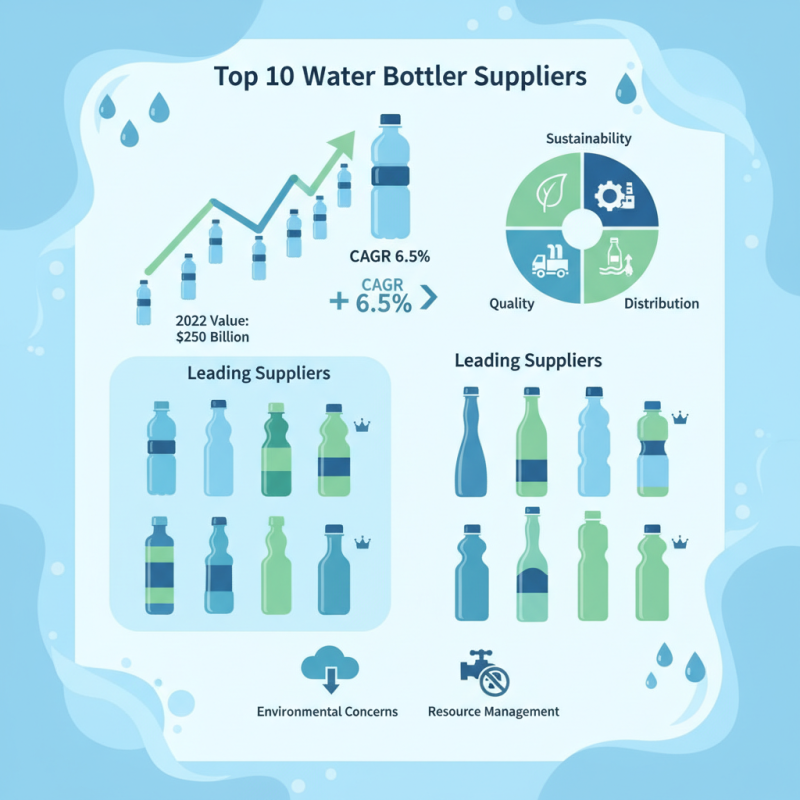
The global water bottler market has shown consistent growth, driven by increasing consumer demand for bottled water. In 2022, the market was valued at approximately $250 billion, with projections indicating a compound annual growth rate (CAGR) of 6.5% through 2030. This rise reflects a shift in consumer preferences toward healthier hydration options.
As more brands enter the sector, it’s crucial to understand who the leading water bottler suppliers are. These companies not only supply beverages but also innovate in packaging and sourcing. Quality, sustainability, and reliable distribution channels are vital factors influencing their success. However, challenges like environmental concerns and resource management remain pressing.
Navigating this landscape requires knowledge of top suppliers. Identifying prominent water bottlers helps businesses secure reliable partnerships. With the right insights, companies can not only thrive but also contribute positively to industry standards and sustainability initiatives.
Overview of the Global Water Bottling Industry
The global water bottling industry is a dynamic and rapidly evolving sector. It provides essential hydration solutions to consumers worldwide. The market has expanded significantly, driven by increasing health awareness and a growing need for convenient beverage options. Many consumers prefer bottled water over sugary drinks, contributing to this surge.
Sustainability is a pressing concern in this industry. Many bottlers are exploring eco-friendly packaging solutions and reducing plastic use. Some companies invest in recycling programs to address environmental issues. However, these initiatives are not yet industry-wide, and the challenge remains substantial. The effectiveness of these efforts often varies between regions and companies.
Competition in the water bottling market is fierce. New suppliers emerge regularly, often lacking the expertise or reliability found in established firms. Consumers should exercise caution and research brands thoroughly. Understanding the sourcing and purification processes can lead to better choices. An industry-wide commitment to transparency is still developing and is crucial for consumer trust.
Criteria for Evaluating Water Bottler Suppliers
When selecting a water bottler supplier, it's crucial to evaluate their expertise and reliability. Start by examining their experience in the industry. A supplier with a long history likely understands market needs better.
Look for certifications that ensure quality standards. This signifies their commitment to safe and sustainable practices.
Tip: Check the supplier's production capacity. If they can’t meet your demand, it could affect your service.
Next, assess their customer service approach. A supplier who communicates effectively will help resolve issues faster. Review their response times and willingness to adapt. Flexibility in negotiations can be a good sign.
Tip: Ask for client references. Real experiences can reveal potential problems or strengths.
Consider their technology and equipment as well. Advanced technology can improve efficiency and product quality. A modern supplier will have a better overall impact on your brand image.
Tip: Be open to feedback. If a supplier's proposal seems off, ask for clarification. It’s important to ensure you’re on the same page before moving forward.
Top 10 Water Bottler Suppliers: Key Features and Offerings
When looking for reliable water bottler suppliers, several key features stand out. First, their capacity to customize bottles is crucial. Many suppliers offer a variety of shapes, sizes, and designs tailored to specific needs. This helps brands create a unique identity in a crowded market. Additionally, the materials used are important. Choosing suppliers that prioritize eco-friendly options can reflect positively on a brand’s image.
Moreover, efficient production timelines play a significant role in supplier selection. A reliable supplier should maintain consistent lead times. Delays can hurt business operations and customer satisfaction. Many suppliers also provide the option for small-scale production runs. This flexibility allows businesses to test new products before large-scale launches.
Quality assurance processes are another critical aspect. Suppliers should adhere to strict quality standards, ensuring the safety and durability of their products. Transparency about sourcing and manufacturing also builds trust with potential clients. Not all suppliers offer this, making it a vital element to consider. Evaluating these features will help businesses find the right partner to meet their water bottling needs.
Top 10 Water Bottler Suppliers: Key Features and Offerings
Regional Analysis of Leading Water Bottler Suppliers
The water bottling industry has seen significant regional variations in suppliers. Understanding these regional characteristics helps in navigating the market effectively. In North America, for instance, there is a growing demand for sustainable packaging. Companies here focus on eco-friendly processes, reflecting a strong consumer preference for environmental responsibility. However, some suppliers struggle with the consistency of supply due to fluctuating regulations.
In Europe, the focus shifts to quality and safety standards. Suppliers in this region prioritize stringent testing and certification, which can lead to higher costs. Surprisingly, despite having a robust framework, some suppliers face challenges in scalability.
Asia, particularly Southeast Asia, presents a different picture. Rapid urbanization drives high demand. Yet, many suppliers have difficulty accessing clean water sources, which poses a challenge for growth.
Each region has its nuances. Supplier reliability varies widely, influenced by local economies and infrastructure. Observing these trends can guide businesses in selecting the right partners. It's notable that while many regions excel, others still have much room for improvement. The quest for quality and sustainability continues to shape supplier dynamics across the globe.
Future Trends in Water Bottling Supply Chains
The water bottling industry is evolving rapidly. Recent reports indicate that by 2025, the global bottled water market is projected to reach $400 billion. This growth is driven by increasing health consciousness and environmental concerns. Companies are adapting their supply chains to become more efficient and sustainable.
Sustainability is now a major focus. Many bottlers are investing in eco-friendly packaging. A study found that 74% of consumers prefer brands that are environmentally responsible. This shift not only supports brand loyalty but also resonates with modern ethical values. However, this transition often poses challenges in terms of cost and sourcing materials.
Moreover, technology plays a vital role in optimizing supply chains. Automation and data analytics are being integrated to predict demand better. Companies report that this has improved efficiency by up to 30%. Yet, reliance on technology raises questions about data privacy and cybersecurity. As bottlers innovate and adapt, striking a balance between modernity and traditional practices remains crucial.
Top 10 Water Bottler Suppliers You Need to Know
| Supplier Rank |
Production Capacity (Million Liters/Year) |
Main Product Type |
Key Markets |
Sustainability Initiatives |
| 1 |
1500 |
Bottled Water |
North America, Europe |
Recycling Programs |
| 2 |
1200 |
Flavored Water |
Asia, Australia |
Eco-Friendly Packaging |
| 3 |
1000 |
Carbonated Water |
Europe, Africa |
Water Conservation |
| 4 |
850 |
Mineral Water |
North America, Asia |
Sustainable Sourcing |
| 5 |
700 |
Spring Water |
Europe, South America |
Carbon Footprint Reduction |
| 6 |
600 |
Alkaline Water |
Asia, North America |
Energy Efficiency Measures |
| 7 |
550 |
Purified Drinking Water |
Europe, Asia |
Water Saving Technologies |
| 8 |
500 |
Distilled Water |
North America, Europe |
Plastic Reduction Initiatives |
| 9 |
450 |
Enhanced Water |
Asia, North America |
Renewable Energy Usage |
| 10 |
400 |
Vitamin Water |
Europe, South America |
Community Water Projects |
Conclusion
The global water bottling industry is a dynamic sector that has seen significant growth and evolution in recent years. Evaluating water bottler suppliers requires a clear understanding of various criteria, including production capacity, sustainability practices, and quality assurance. The top 10 water bottler suppliers stand out due to their innovative offerings and commitment to meeting diverse consumer needs.
Regionally, the leading water bottler suppliers exhibit varying strengths, influenced by local market demands and regulatory environments. As the industry moves forward, future trends indicate a growing emphasis on sustainable practices and advanced supply chains. This focus not only addresses environmental concerns but also aligns with consumer preferences for responsibly sourced bottled water. Overall, understanding these key players and trends is crucial for stakeholders within the water bottling sector.

 Dadi Plastic